
If you’re planning a flooring refresh in the U.S., there’s never been a better time. The flooring world in 2025 is alive with bold textures, warm natural tones, sustainable materials, and high‑tech features. Homeowners and designers alike are stepping away from the “safe and generic” and embracing floors that make a statement and perform. Here’s your guide to what’s trending — and how to bring these looks into your home.
1. What’s Driving the Change?
Several big forces are shaping flooring trends in American homes:
Demand for durability & real‑life performance. Homeowners want floors that look good and hold up to kids, pets, moisture, and daily use. Waterproof luxury vinyl planks (LVP), rugged engineered woods and high‑end tile are rising.
Sustainability and material story. The environment, health and material provenance are front‑of‑mind. Eco‑friendly options like bamboo, cork, reclaimed wood, recycled content are more than “nice to have”.
Design wanting character and warmth. The cool grey, ultra‑minimal floors of previous years are fading. People are craving warmth, texture, and personality underfoot.
Open‑plan and indoor/outdoor living. With homes that flow across zones, flooring must carry through and coordinate spaces seamlessly. Bigger planks, fewer seams, consistent materials are all part of this.
2. Key Flooring Trends in the U.S. for 2025
Here are the trends you’ll see everywhere — and how to apply them in your space.
Warm, Earthy Tones & Natural Finishes
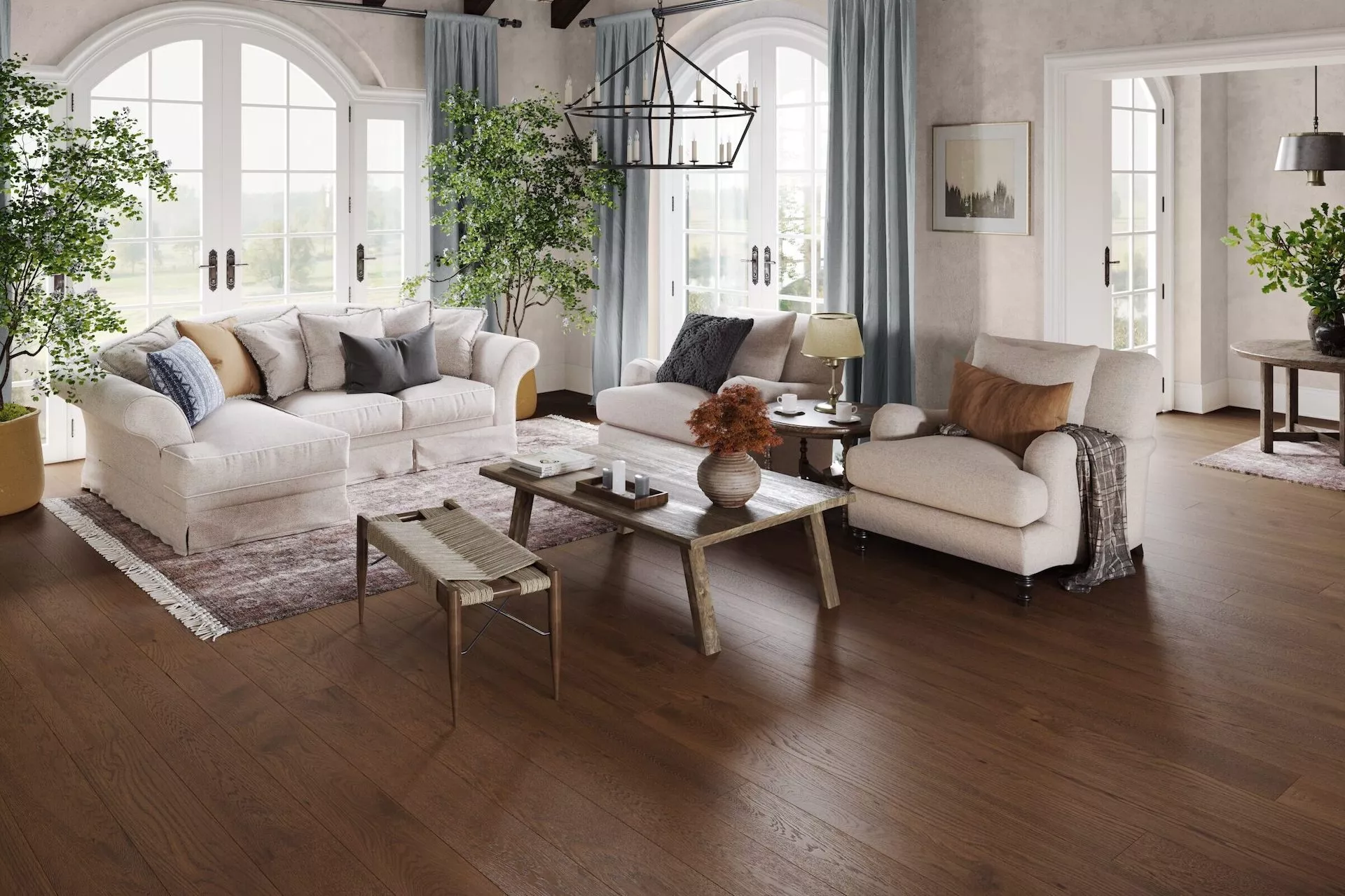
The grey‑washed, pale wood floor trend is fading. In its place: honeyed maples, rich caramel browns, sandy beiges and deeper wood tones.
Matte or low‑sheen finishes are preferred over high gloss, creating a more natural, lived‑in feel.
Design tip: Pair these warmer floors with light walls and soft textiles (linen/rattan) for contrast. If your space is dark or small, go for slightly lighter wood but still warm tones.
Oversized Planks & Tiles


Less seams, more flow. Extra‑wide hardwood and large‑format tiles are simplifying visuals and making spaces feel bigger. Best Flooring Store+1
In open‑plan homes this helps unify kitchen, dining and living zones under one flooring look.
Design tip: Ensure the room is proportionate to handle wide planks; in very narrow or small rooms, too wide can feel off. Large tiles work especially well in bathrooms, entryways.
Geometric Patterns & Statement Floors
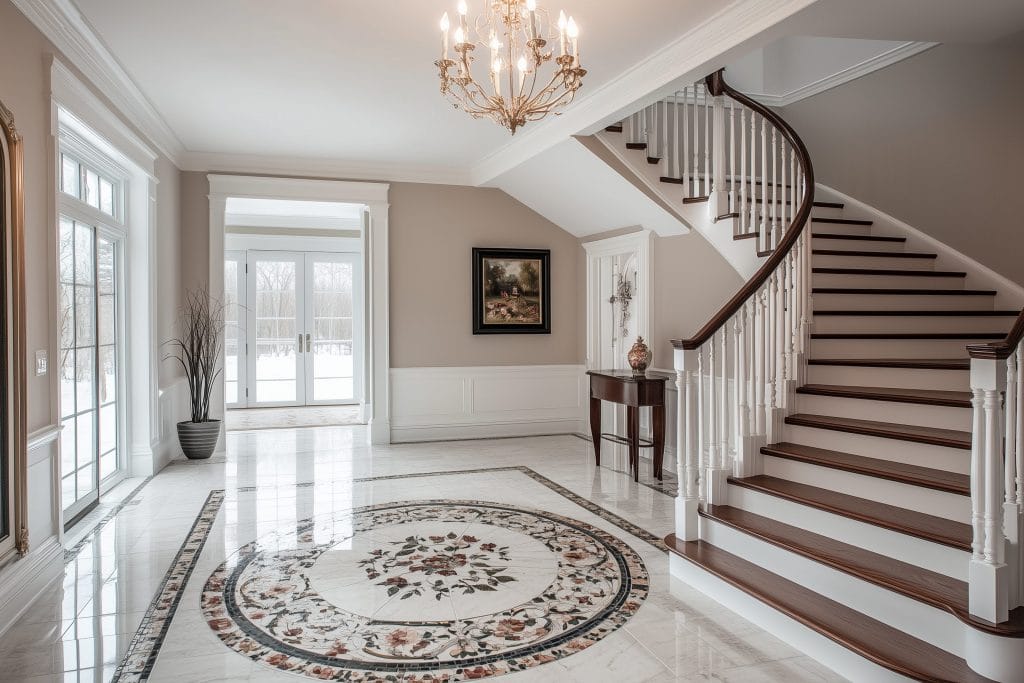
Patterned floors are making a strong comeback: herringbone, chevron, parquet, mosaic tiles.
These are especially popular in foyers, powder rooms, accent zones — where you want a “wow” moment.
Design tip: If you use a bold floor pattern, keep other elements (walls, furniture) simpler so the floor stands out without competing.
Sustainable & Eco‑Friendly Materials
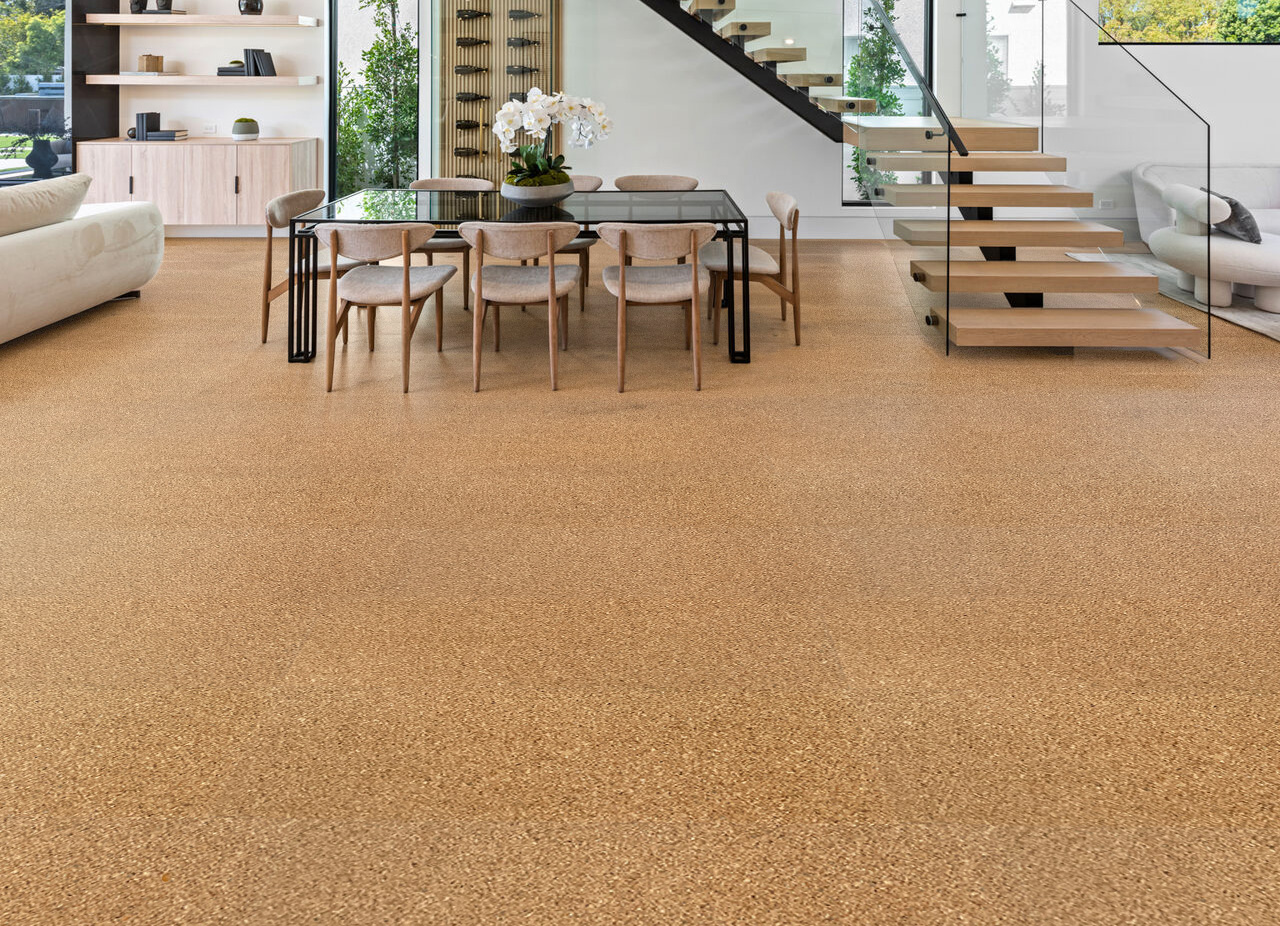
Bamboo, cork, reclaimed wood are trending—not just for their look but for the story they bring.
Even “regular” flooring brands are offering recycled content, low‑VOC finishes, more transparency on sourcing.
Design tip: Highlight the material in the room – e.g., a cork floor in a home office adds sound‑absorption and a unique aesthetic.
Waterproof & High‑Performance Floors
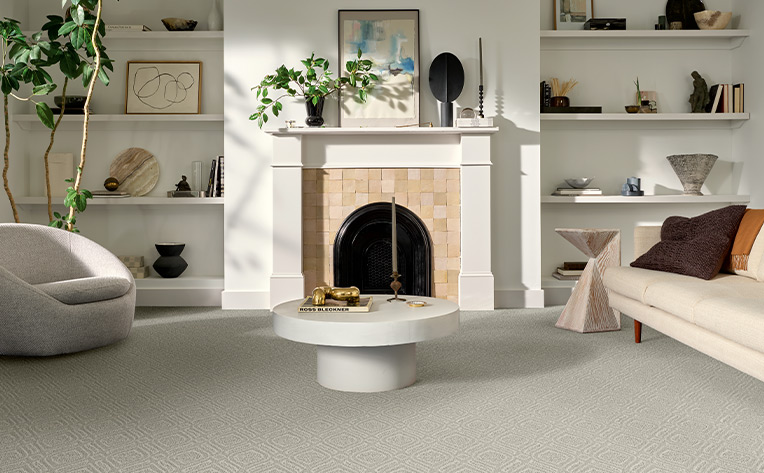

With busy households, pets, and open‑plan spaces, floors need to perform. Waterproof LVP and hybrid floors are dominating.
They mimic wood or stone but offer resistance to damage, moisture, and everyday wear.
Design tip: For bathrooms, kitchens, or basements consider a waterproof option — then coordinate complementary textures in other rooms.
3. How to Choose & Use These Trends in Your U.S. Home
Here are some practical steps for homeowners and designers:
Start with the room purpose. High‑traffic zones? Prioritise performance (waterproof, scratch‑resistant). Formal areas? You might lean into patterns or premium woods.
Think about continuity. In open‑concept homes you’ll often want one flooring type or consistent material across zones to keep the flow.
Consider your climate & region. U.S. regions vary — e.g., humid South, cold Northeast. Waterproof/humidity‑resistant floors matter more in some zones.
Balance risk & longevity. Flooring is a long‑term investment. Select styles you’ll still love see‑years from now (warm tones, quality materials) rather than overly trendy extremes.
Include texture & layering. Even with warm woods, consider textured finishes (wire‑brushed, hand‑scraped) or area rugs to add dimension.
Budget wisely. Some trends (e.g., reclaimed wood, large format tile) cost more upfront. Evaluate where you allocate your budget vs. where compromises are acceptable.
4. Trend Highlights & Takeaways
Warm, natural palettes are reclaiming the floor. Gone (or fading) is the cold grey all‑wood.
Big formats + fewer seams = more expansive feel.
Patterns are back: a great way to make one area pop.
Sustainability isn’t niche — it’s mainstream.
Performance matters: waterproof, durable, family‑friendly floors are in demand.
Conclusion
If you’re updating flooring in your U.S. home this year, you’re in a great spot. The 2025 trends combine style, substance and story. Whether you lean toward warm hardwoods, bold geometric tile, eco‑friendly cork, or durable waterproof vinyl, the key is to pick what aligns with your lifestyle, region and design aesthetic.